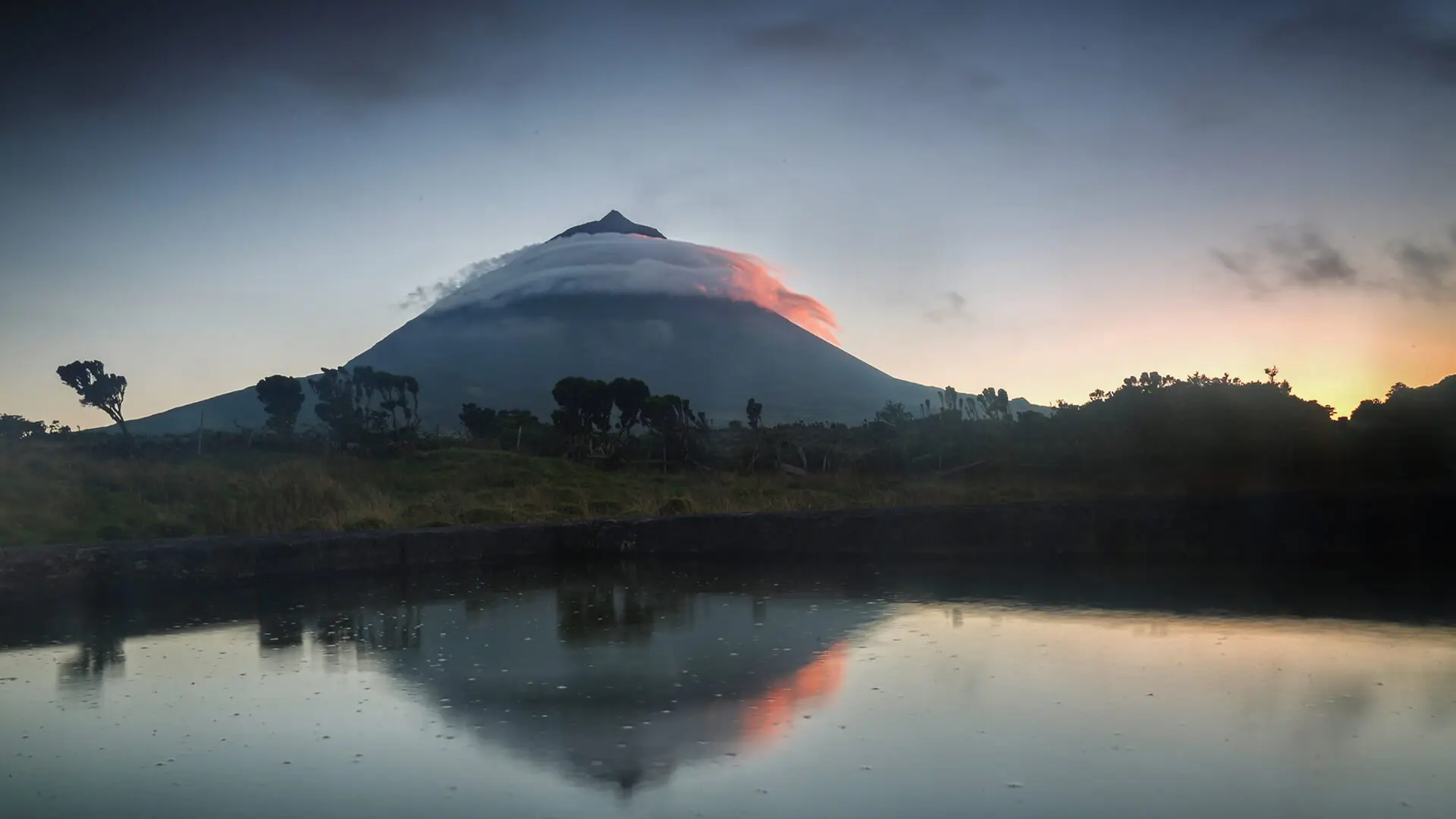
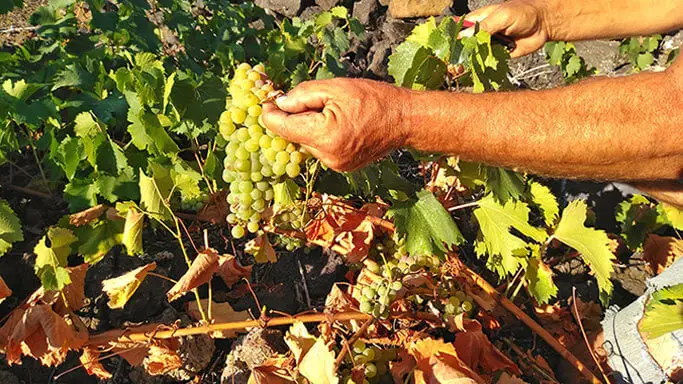
A Living Heritage: Pico’s Vineyard Landscape
Classified as a UNESCO World Heritage Site since 2004, Pico Island’s vineyard culture landscape is an extraordinary testimony to the relationship between humans and volcanic nature. Over centuries, Pico’s viticulturists built a network of currais — walls of black basalt stone — that protect the vines from Atlantic winds and sea salt.
Where to See the Vineyard Landscape
Lajido de Santa Luzia — North Zone
Lajido de Santa Luzia is one of the best-preserved areas of the protected landscape. Here, the currais extend to the sea, creating a geometric mosaic of black stone and intense green. It’s one of the most photogenic spots in the entire archipelago.
Criação Velha — South Zone
In the south, Criação Velha offers another perspective of this unique landscape. With views of Faial, the vineyards here are among the oldest on the island, with currais dating back several centuries.
Interpretation Centre
The Pico Island Vineyard Culture Landscape Interpretation Centre explains the history, agricultural techniques, and cultural importance of this tradition. It’s an excellent starting point for understanding the depth of this heritage.
How to Visit
The best way to experience the vineyard landscape is with a local guide. Terralta’s Vineyard Route covers both zones (North and South) in a full-day tour, with regional lunch and wine tasting included. The Wine & Flavours Route deepens the gastronomic experience, with visits to cellars and distilleries.
Fun Facts
- The currais create a microclimate that allows grapes to ripen despite the Atlantic climate
- Pico’s winemaking tradition dates back to the 15th century
- Pico wines were exported to the Russian court in the 18th century
- The landscape is visible from space — a geometric mosaic unique on the planet